



- New
- Out of stock


Reference: 8430095616954
Brand: Nazza
Isopropyl alcohol, also known as 2-propanol or isopropanol, is used as a cleaner for electrical contacts. -Does not leave residues -purity >99.5% isopropyl alcohol. It is NOT a dissolution -Slightly soluble in water Useful for cleaning the printing bed, as well as for cleaning the remaining resin on printed parts without a trace of stains.
Reference: 572-1205
Nozzles (nozzle) for 3d printer, valid for most printers and materials on the market. See in the description the options to select
Reference: 8411322235803
Brand: 3dlac
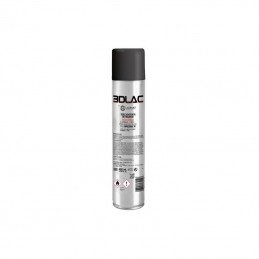
3DLAC SPRAY 400ml - STRONG AND LONG-LASTING ADHESION - EXTENDED DURABILITY (APPROX. 400 APPLICATIONS) - NO WARPING Its function is to maintain the first layer of plastic to maintain the start of printing constantly, avoiding undesirable errors. 3DLAC is the perfect replacement for Kapton tape and otros types of fasteners due to its cost savings and easy...
Reference: CAPPTFETL
Brand: Capricorn
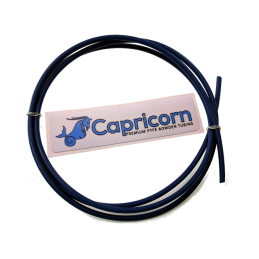
This item is sold in units of 10 cm, you can adjust the desired length, adding as many units as you want. We will supply the tube to you continuously for lengths less than 2 m. (for example if you add 5 units we will send you a continuous tube of 50 cm) High quality Teflon tube, with very low friction and high temperature resistance. Capricorn XS vs TL...
Reference: REF000081R
This item is sold in 10cm units, you can adjust the desired length, adding as many units as you want. We will supply you with the tube continuously for lengths less than 2m. (for example, if you add 5 units we will send you a continuous tube of 50cm) Generic Teflon Tube Inner Diameter (ID): 1.9mm ± 0.15mm Outer Diameter (OD): 4.0mm
Banner


When it comes to 3D printing materials, nylon (PA-6) is one of the most popular materials among professional users. Nylon has a wide range of applications thanks to its unique properties and its low coefficient of friction with a high melting point makes it particularly resistant to abrasion and allows it to be used in the printing of parts such as functional interlocking gears. Combined with 20% fiberglass makes this material one of the most durable and resistant printable on a home printer.
For good results, you should print at a temperature of 260-280o and the printing table should be heated to 90-110o.
 No review at the moment
Stiffness and Weight: The PA12-CF is the clear winner if you are looking for maximum stiffness with the lowest possible weight. Carbon fibre is extremely light and provides a very firm structure, ideal for parts that do not have to bend under load. In contrast, PA12-GF is heavier (glass has a higher density) and, although it is rigid, it maintains greater elasticity than carbon.
Electrical Behavior: This is a critical difference. The PA12-GF is a natural electrical insulator, making it perfect for electronics housings or connectors. PA12-CF, due to the nature of carbon, is usually conductive or dissipative, so it should not be used where insulation is required.
Toughness and Impact: Glass provides greater resistance to impact. A piece of PA12-GF can take a hit and absorb some of the energy, while PA12-CF, being so rigid, tends to be more brittle and can crack in the face of dry impacts or extreme vibrations.
Moisture stability: The most famous difference is that PA6 is "fluffy" at the molecular level; it absorbs a lot of water. This causes the part to swell slightly and lose stiffness over time. PA12 has minimal moisture absorption, so its dimensions do not change even if you work in marine or very humid environments.
Thermal Resistance: PA6 gains in heat. It has a higher melting point (around 220°C), which allows it to maintain its shape in temperatures where PA12 (which melts around 178°C) would already begin to soften.
Chemical Resistance: PA12 is exceptionally resistant to harsh chemicals, gasolines, and oils. That's why it's the preferred material for fuel lines and pneumatic systems. PA6 is hardy, but its porosity to moisture makes it more vulnerable to certain chemical degradants in the long term.
Ease of Processing: The PA12 is much more docile. In 3D printing it has less "warping" (deformation of the corners) and in injection it is more stable. The PA6 is more technical and "temperamental" to work with due to its thermal contractions and environmental sensitivity.
Data sheet
When it comes to 3D printing materials, nylon (PA-6) is one of the most popular materials among professional users. Nylon has a wide range of applications thanks to its unique properties and its low coefficient of friction with a high melting point makes it particularly resistant to abrasion and allows it to be used in the printing of parts such as functional interlocking gears. Combined with 20% fiberglass makes this material one of the most durable and resistant printable on a home printer.
For good results, you should print at a temperature of 260-280o and the printing table should be heated to 90-110o.